
Best Family Vlogging Cameras Under $500: A Beginner Comparison
A practical comparison of family vlogging cameras under $500, from used mirrorless bodies to compacts and action cams, plus what to buy alongside them.

A camera does not make a family vlog good. A camera that is charged, within reach and pointed at the right moment does. That is the reason to think hard about a budget: every dollar you keep is a dollar for a spare battery, a microphone and a small tripod, and those purchases will lift your videos further than a bigger sensor will. What follows is a plain comparison of what you can realistically buy under $500 and how each option behaves when a four-year-old is running through the frame.
What Matters More Than Megapixels
Resolution is the last thing on the list. What separates a camera you will actually use from one that sits in a drawer comes down to a handful of practical details.
- A screen that faces you. A flip-up or side-hinged display lets you frame yourself while talking. Fixed screens make handheld vlogging guesswork.
- Autofocus that tracks faces. Kids move. Look for face or eye detection, and for a camera that holds focus when someone walks toward the lens.
- A microphone input. A 3.5mm jack means you can add a lav or shotgun mic later. On-camera audio picks up wind, air conditioning and every echo in the room.
- Battery life and cheap spares. Mirrorless cameras often quit after an hour of stop-start filming.
- Size and weight. If it does not fit in a bag you already carry, it will stay home.
- 1080p is fine. Full HD at 30 or 60 frames per second is plenty for online video, easier to edit and kinder to your memory cards. Shoot 4K only if you want to crop in editing or you have a fast computer.
Your phone belongs in this conversation. A recent model with a wide lens and good stabilization often beats an older budget camera for casual clips. The case for buying a camera anyway: a mic jack, optical zoom, better low-light performance, physical controls, and the freedom to hand it to a child without worrying about your messages.
The Safe Bet: A Used Mirrorless Camera
Used mirrorless bodies with a kit lens are the sweet spot under $500. You get a larger sensor, interchangeable lenses and real buttons, and prices on entry-level models from a few years ago have settled. Check current listings before you commit; the used market moves constantly.
Canon EOS M50 and M50 Mark II
The friendliest family camera in this range. The screen flips out to the side and rotates, menus are written for humans, autofocus is reliable in Full HD, and there is a mic input. Its 4K mode is heavily cropped and the focus hunts, so shoot 1080p and ignore the 4K badge. One caveat: Canon stopped developing the M-mount lens line, so buy any extra lenses in the same purchase or plan to adapt older EF glass.
Sony a5100, a6000 and the step-up bodies
The a5100 is tiny and its screen flips up 180 degrees, but there is no mic jack and battery life is modest. The a6000 offers better image quality and controls; its screen tilts but does not face forward, and it also lacks a microphone input, which makes it a poor first choice for talking-head vlogging. If you spot an a6100 or a6400 near the top of your budget, the flip-up screen, mic jack and much stronger autofocus justify the stretch.
Panasonic Lumix G7 and G85
Both have fully articulated screens and a mic jack, and Micro Four Thirds lenses are inexpensive. The G85 adds in-body stabilization, which helps a lot when you are walking and filming. Video autofocus is the trade-off: it handles a seated subject well and can drift when a toddler sprints past. Low light is weaker than the larger sensors above, so lean on window light.
Compacts and All-in-Ones Worth a Look
The Sony ZV-1 was built for exactly this job: flip-out screen, a built-in mic with a wind muff, a bright lens and crisp 4K. There is a mic input but no headphone jack, and the battery is small, so buy spares. Used RX100-series cameras are pocketable travel companions and lovely in daylight, though less comfortable for handheld self-filming. These are the cameras you can hand to a grandparent without a tutorial.
Action Cameras for Pool Days and Chaos
A GoPro from the Hero 9 generation onward, or a comparable DJI Osmo Action, brings a front-facing screen, excellent stabilization and waterproofing without a case. They are brilliant at the beach, on bikes and in the rain. They are also the weakest option indoors: small sensors struggle in dim rooms, and the wide lens distorts faces at arm's length. Audio needs help, so budget for a media mod or mic adapter. Treat one as a second camera alongside a phone or mirrorless body, unless your vlogs are almost entirely outdoors.
Where the Rest of Your Budget Goes
Spend on the whole kit, not just the body. Before you buy anything, set aside room for:
- Two spare batteries and a small charger, so filming is never cut short.
- A 64GB or 128GB card rated U3 or V30, plus a backup. Avoid unbranded cards; corrupted footage is heartbreaking.
- A microphone. A wired lav clipped to your collar, or a compact shotgun with a furry windscreen, does more for perceived quality than any lens.
- Support. A mini tripod, a flexible tripod that grips a chair back, or a phone clamp for overhead shots.
- Light. A small LED panel is useful, but a window and a white wall are free. Face your subjects toward the light.
A $300 camera with a decent mic, fresh batteries and steady support will out-shoot a $480 body with none of those things.
Buying Used Without Getting Burned
- Ask for a short video clip shot on the camera today, with sound. It confirms the sensor, autofocus and mic all work.
- Inspect the screen, lens glass and lens mount for scratches or haze.
- Test autofocus by filming someone walking toward the camera, then away.
- Open every port door: mic jack, HDMI, charging, card slot. Wobble the card in the slot.
- Buy from a seller with a return window, and pay with a method that offers buyer protection.
Note the firmware version while you are at it, and check whether an update fixes anything you care about. If the camera will be handled by kids, a used body with a modest price tag beats a new one you are afraid to let out of the bag.
The Practical Bottom Line
Three sensible paths. If you already own a recent phone, spend under $150 on a mic, a small tripod and a spare cable, and put the rest away until you know what you are missing. If you want one camera that does everything reasonably well, a used Canon M50 with the kit lens and a lav mic is the calmest choice. If you film outdoors most of the time, pair a phone with an action camera instead.
Before you upload, ask one question: would this clip embarrass my child in eight years? If the answer is maybe, keep it for the family group chat.
Whatever you pick, expect the first ten videos to feel awkward. Shoot short clips rather than long takes, keep the camera near eye level, get close enough that the mic can hear you, and back up your files the same evening.
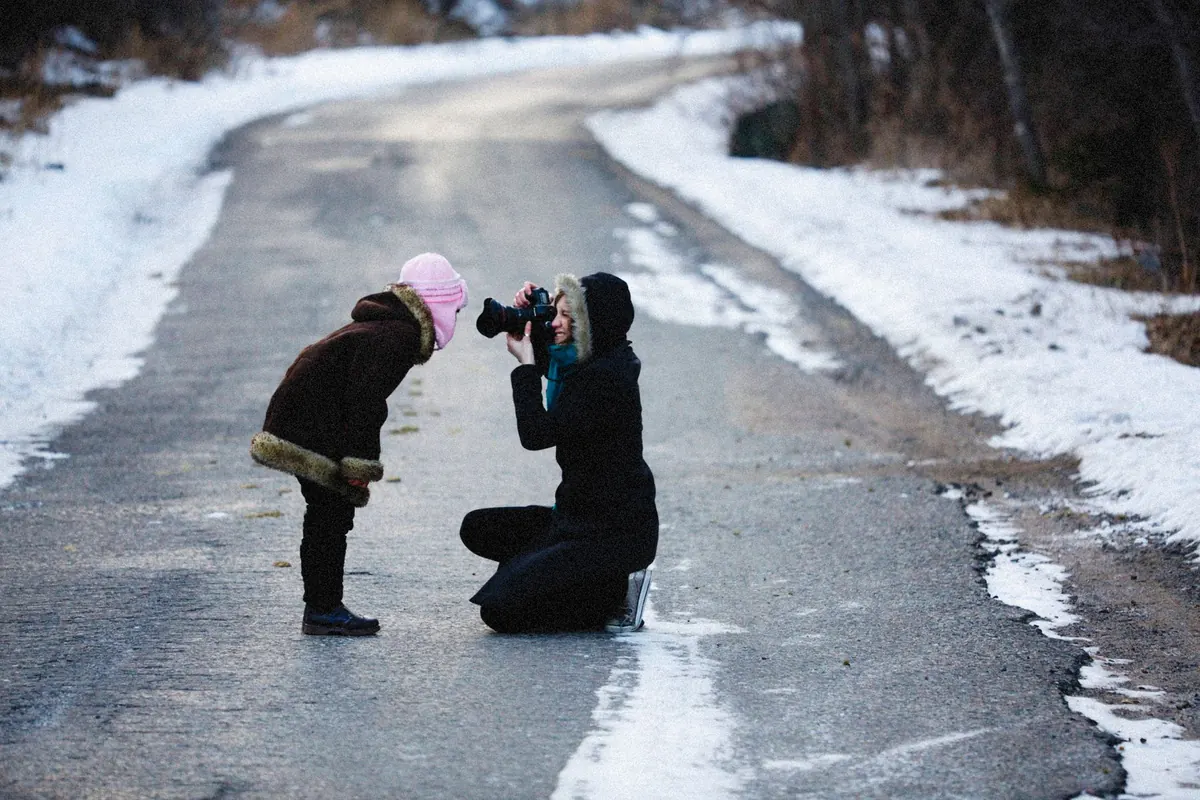
Photo: Vitaly Gariev / Pexels